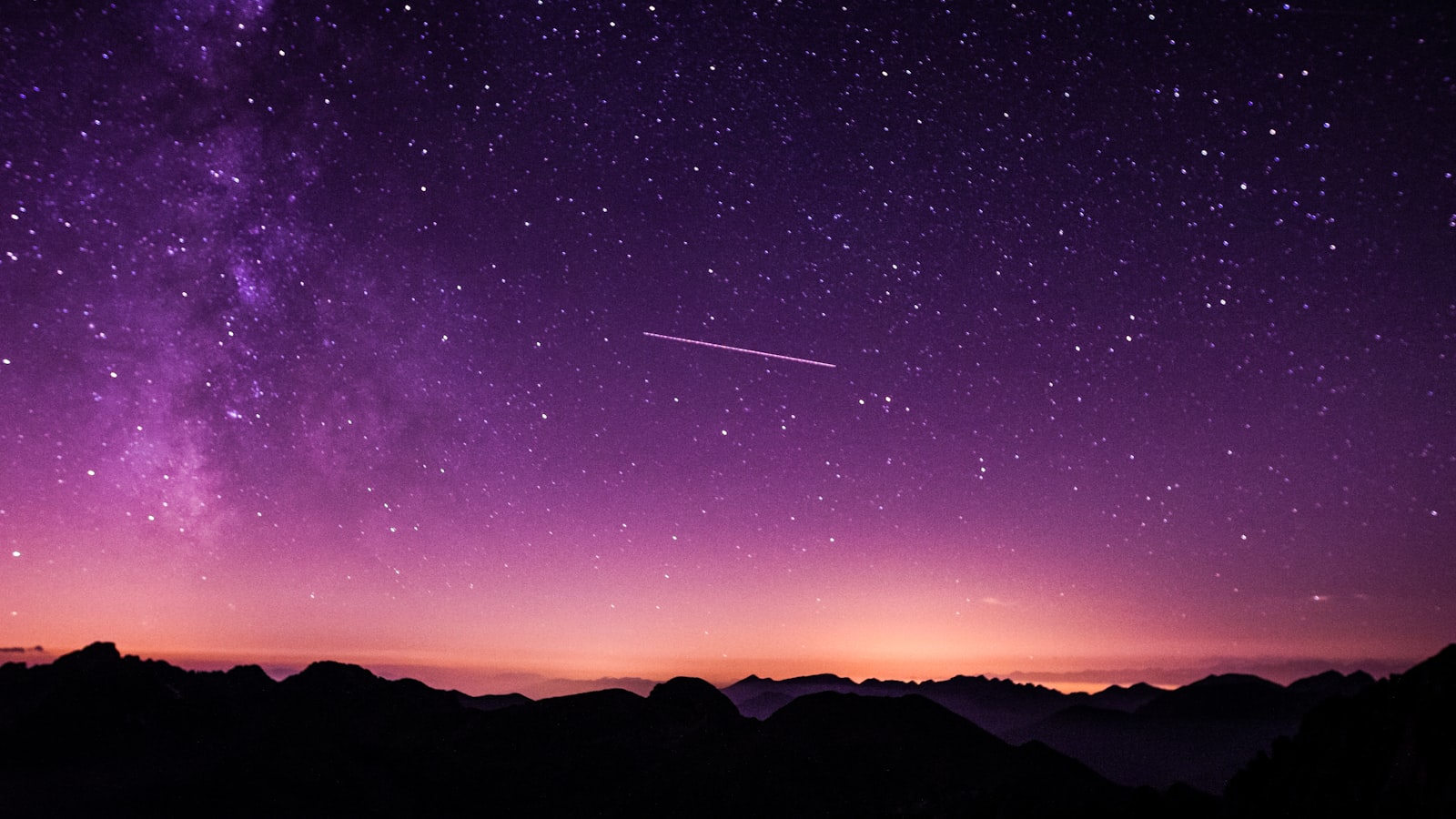
The starlight landing in your eye tonight is old. Some of it left its source a few years ago, some a few centuries, and the glow of a distant galaxy may have departed before anything resembling a human walked the Earth. When you look up, you are not seeing the sky as it is. You are seeing a layered archive of the past, each point of light a different age.
That idea sounds poetic, but it rests on hard measurement. Astronomers can state the distance to a star with real confidence, and the methods they use are clever and surprisingly understandable. This guide explains what a light-year actually is, why looking out means looking back, and how anyone could begin to measure the gulf between us and the stars.
A Light-Year Is a Distance#
The most common point of confusion is the term light-year. Despite the word year in it, a light-year is not a measure of time. It is a measure of distance, specifically how far light travels in one year. Light moves at an almost incomprehensible speed, and even at that pace it takes a full year to cover one light-year, which tells you how vast the unit is.
We use it because ordinary units collapse under the scale. Measuring the distance to a star in miles or kilometers produces numbers so long they become meaningless, a string of digits the mind cannot hold. The light-year compresses that into something graspable. Saying a star lies four light-years away is far more useful than writing out the equivalent in kilometers, which would run to many digits.
This unit also carries a built-in piece of information. If a star is a hundred light-years away, then its light took a hundred years to reach you. The distance and the travel time are two faces of the same fact, which is why astronomers reach for the light-year so often. It tells you how far and how long in a single word.
Looking Out Is Looking Back#
Because light takes time to travel, every glance at the night sky is a glance into history. You never see a star as it is right now, only as it was when the light you are catching first set out. For the nearest stars this lag is a few years, but for distant objects it stretches into the deep past.
This has a strange consequence. A star you admire tonight might already have changed dramatically, or even ended its life, while its older light still streams toward you. The sky is not a live broadcast, it is a recording, and the farther out you look, the older the footage. Some of the faint smudges visible from a dark site are showing you an era long before our species existed.
The night sky is the only place where you can see the past directly. The light from a distant star is a message that has been in transit for years, and it arrives unedited, exactly as it left.
That delay is also why distance matters so much in astronomy. Knowing how far away something is tells you not just where it sits, but when you are seeing it. A map of stellar distances is also a map of time, with the nearest stars showing you the recent past and the farthest reaching back almost to the beginning.
How Astronomers Measure It#
The natural question is how anyone could possibly measure such distances. You cannot stretch a tape measure to a star. The answer for nearby stars is an elegant trick called parallax, and you can demonstrate the principle right now with your own hand.
Hold a finger at arm's length and look at it with one eye, then the other. Your finger appears to jump against the background, because you are viewing it from two slightly different positions. Astronomers do the same thing with Earth's orbit. They photograph a nearby star, wait six months until Earth has moved to the far side of its orbit, and photograph it again. The star shifts by a tiny angle against the distant background, and the size of that shift reveals its distance.
- Closer stars shift more. A nearby star shows a larger parallax angle, just as your finger jumps more than a tree across the street.
- Farther stars shift less. The angle shrinks with distance until it becomes too small to measure directly.
- The baseline is Earth's orbit. The width of our path around the Sun provides the two viewpoints that make the method work.
- Geometry does the rest. With the shift measured and the baseline known, simple triangulation gives the distance.
Parallax works beautifully for the nearer stars but runs out of reach for very distant ones, whose shift becomes too small to detect. For those, astronomers turn to other methods, using certain stars whose true brightness is known so that their apparent dimness reveals how far away they must be. Step by step, these techniques build a ladder of distance that reaches from the Sun's neighbors out across the galaxy and beyond.
A Sense of the Scale#
With the methods in hand, the actual numbers start to land. The nearest star beyond the Sun lies a little over four light-years away, which is already a distance light needs years to cross. The bright stars you know by name range from a handful to hundreds of light-years off, and the faint glow of the Milky Way band reaches across many thousands.
These distances reshape how you see a clear night. The stars scattered across the sky are not at one uniform depth, like dots painted on a dome. They sit at wildly different distances, a near star and a far one appearing side by side purely by chance of alignment. A constellation is a flat pattern we impose on points strewn through enormous depth, which is why the stories and myths behind the constellations are cultural inventions rather than real groupings in space.
Holding that scale in mind changes the texture of stargazing. When you next learn the night sky by season and start naming stars, remember that each one is a separate sun at its own staggering distance, and that the light you are gathering set out long before it reached you. The flat sky quietly gains a third dimension of depth and time.
The Sky as a Time Machine#
There is a quiet wonder in realizing that the simplest act, looking up, is also a kind of time travel. The photons arriving in your eye carry no recent news, only an old portrait of where they came from. The deeper you look, the older the picture, until the faintest light shows you a universe younger than the one you live in.
So the next clear night, pick out a star and let the thought settle in. The glow you are seeing left that star years ago and crossed an unthinkable distance to find you, tonight, here. Knowing how far away the stars truly are does not diminish them. It turns every glance upward into a conversation with the past.